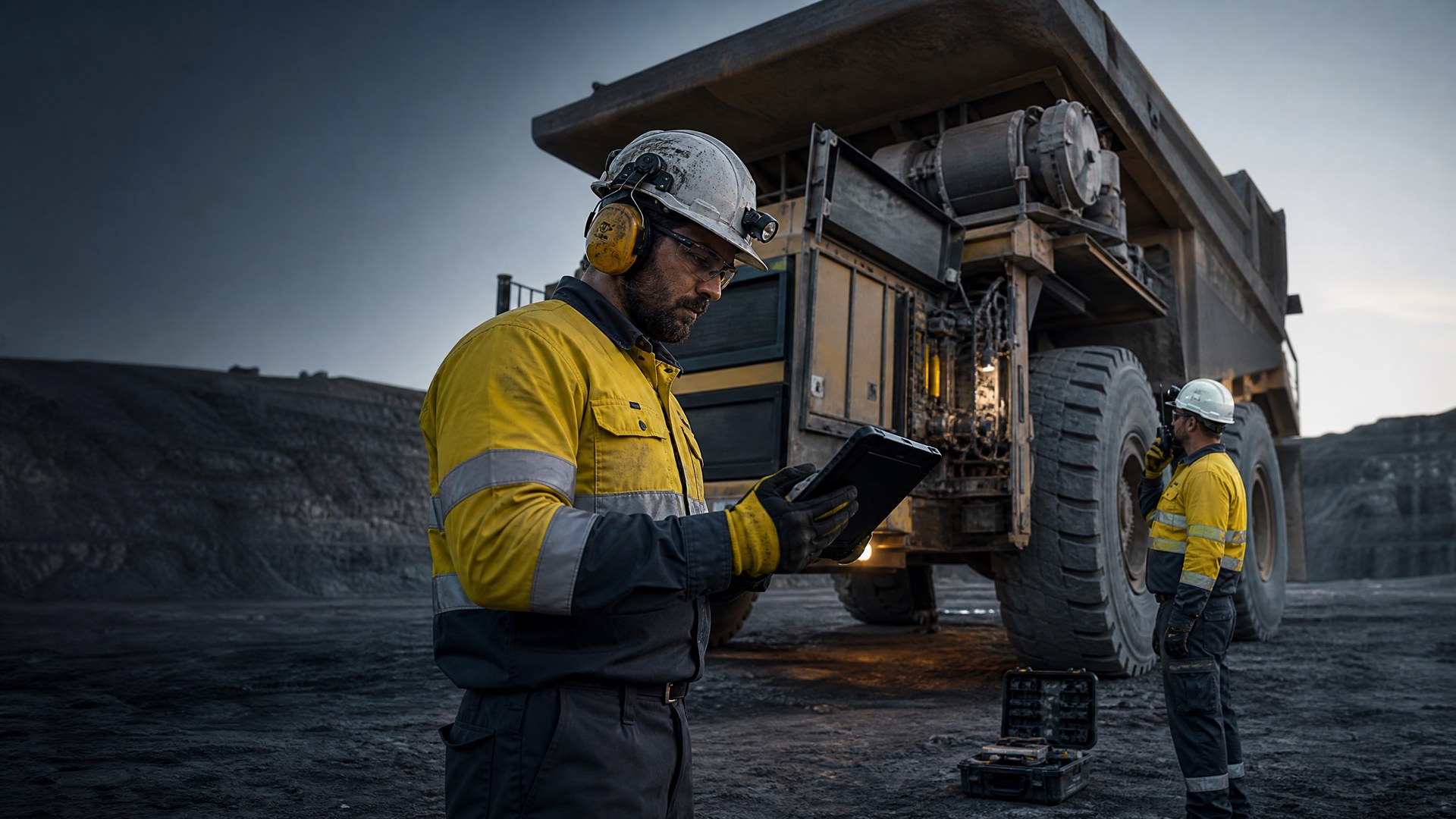

Every time a frontline worker stops to search for an answer, your operation pays a hidden cost. Here's how to eliminate that friction with structured knowledge infrastructure.
The True Cost of Context Switching for Heavy Machinery Operators
In heavy industry, operational efficiency is often measured by machine uptime, cycle times, and fuel consumption. However, there is a hidden productivity leak that rarely appears on standard operational dashboards: the cognitive and operational cost of context switching for frontline workers.
When an operator or maintainer encounters an unfamiliar issue, they are forced to shift from executing a task to searching for a solution. This process typically involves consulting a paper manual, calling a supervisor, or physically leaving the machine to seek advice from a colleague. This constant switching between execution and problem-solving creates significant friction, delaying critical operations and introducing safety risks.
The Disconnect Between Manuals and Reality
Standard equipment manuals are designed for ideal conditions. They outline proceduralised steps for routine maintenance and operation. However, frontline operations are rarely ideal. Machines operate in harsh environments, face unexpected wear, and exhibit quirks that are not documented in official guides.
"The gap between what is written in the manual and what actually happens on the job site is where the most valuable operational knowledge lives."
When a worker encounters a discrepancy between the manual and reality, they must bridge that gap themselves. This often requires tracking down a more experienced operator or mechanic who has faced a similar issue. The time spent finding this person, explaining the problem, and obtaining a solution is a direct cost to the enterprise.
The Enterprise Impact of Fragmented Knowledge
The financial impact of this fragmented knowledge sharing is substantial. Consider the compounding effect of these delays across a large-scale mining or construction operation:
IssueTraditional Response TimeOperational ImpactUnfamiliar fault code30-60 minutes (searching manuals, calling support)Machine idle, production delayedUnexpected component wear1-2 hours (consulting specialists, waiting for advice)Potential secondary damage, extended downtimeShift handover miscommunicationOngoing (re-diagnosing issues)Repeated work, increased safety risks
These delays are not due to a lack of worker skill, but rather a lack of immediate access to the right information. The enterprise is paying for the time it takes workers to find answers, not just the time it takes to fix the problem.
Knowledge as a Business Asset
To mitigate the cost of context switching, enterprises must treat frontline knowledge as a critical business asset. This means capturing the hard-won insights of experienced operators and making them instantly accessible to the entire workforce.
A centralised knowledge network allows workers to query specific issues and receive immediate, contextually relevant solutions. Instead of abandoning their task to search for an answer, they can access the collective intelligence of their peers directly from the field. This transforms isolated problem-solving into a collaborative, data-informed process.
The Role of AI in Frontline Operations
Advanced AI technologies, such as DOCS AI, are essential for operationalising this knowledge. By synthesising technical documentation with real-world, peer-validated insights, AI can deliver precise answers to complex queries in real-time.
This approach eliminates the need for manual context switching. When a worker asks, "How do I bypass this specific sensor fault in sub-zero temperatures?", the AI can retrieve both the official procedure and the practical workarounds developed by experienced operators. This ensures that the worker receives a safe, effective solution without leaving the job site or delaying production.
Building a Resilient Knowledge Infrastructure
Investing in a knowledge network is not just about improving efficiency; it is about building a resilient operational infrastructure. By institutionalising frontline knowledge, enterprises can protect themselves against the loss of expertise due to staff turnover or retirement.
Furthermore, the data captured within these networks provides invaluable insights into recurring issues, equipment performance, and training needs. This intelligence can inform strategic decisions, drive continuous improvement, and ultimately provide a significant competitive advantage in the heavy industry sector.
The true cost of context switching is not just the time lost searching for answers; it is the missed opportunity to leverage the collective expertise of the workforce. By empowering frontline workers with immediate access to critical knowledge, enterprises can optimise operations, enhance safety, and unlock the full potential of their human capital.