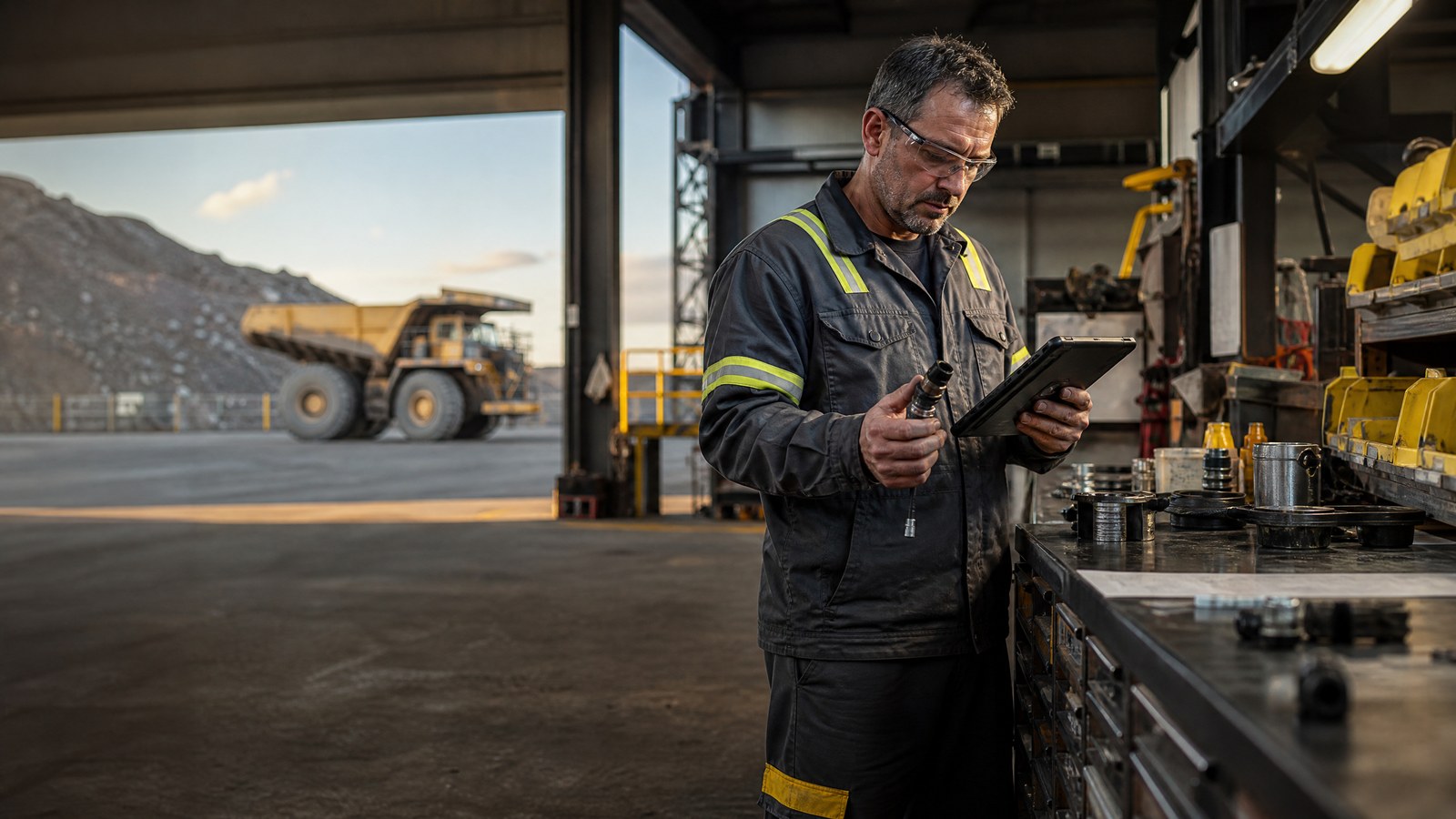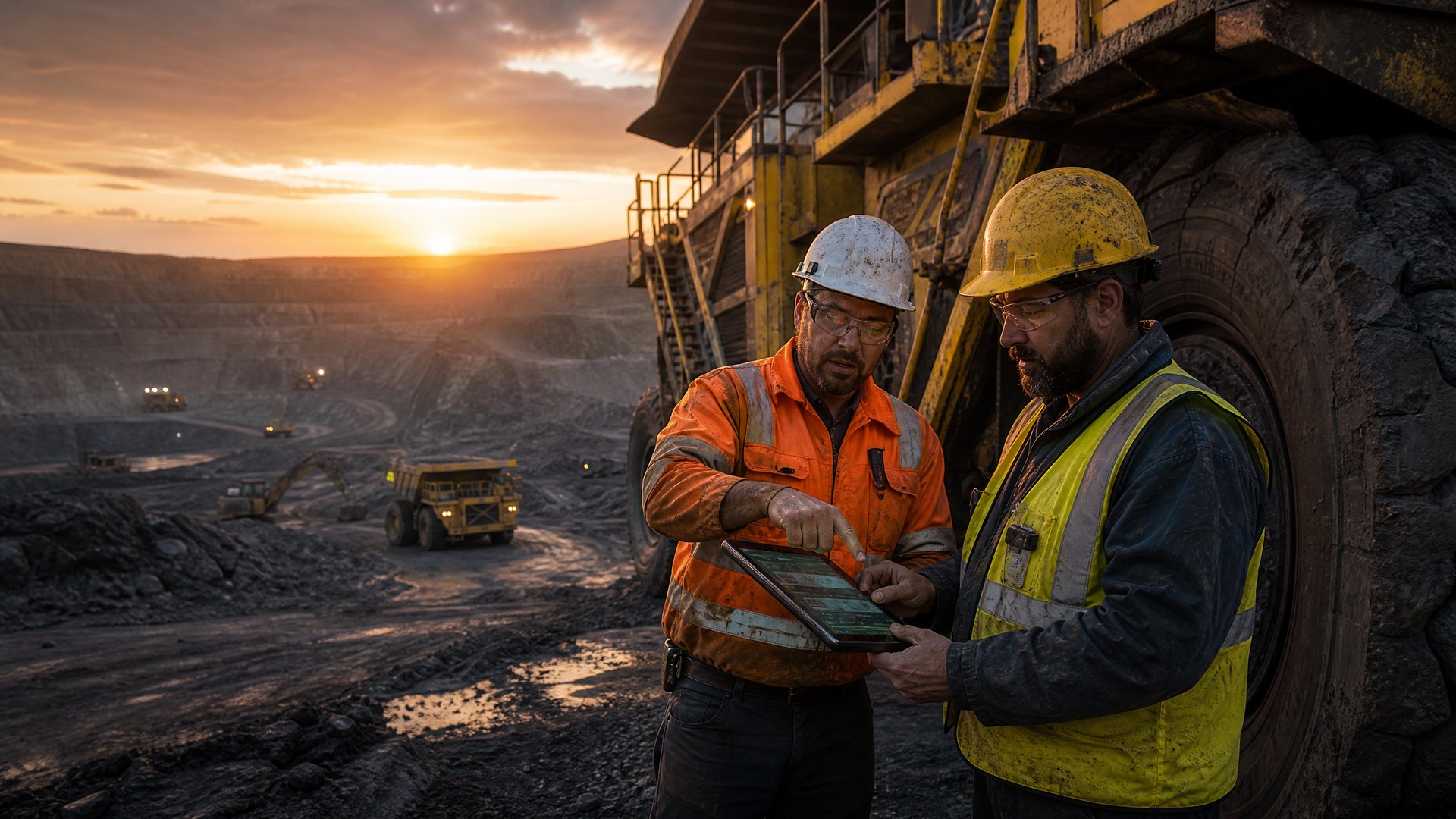

Every 12 hours, critical knowledge is lost in shift handovers. Discover how AI and connected intelligence turn this vulnerability into a strategic advantage.
The High Stakes of Shift Handover: Why Your Operations Leak Value Every 12 Hours
Every 12 hours, across mining and construction sites worldwide, a critical transfer of information takes place: the shift handover. This process is the operational bridge between the outgoing crew, who hold the immediate, hard-won context of the day's challenges, and the incoming crew, who must seamlessly pick up the baton. Yet, despite its importance, the shift handover is often the point where critical knowledge is lost, leading to safety risks, equipment downtime, and a massive drain on operational efficiency.
In heavy industry, the stakes are simply too high to rely on fragmented communication. When shift handovers are proceduralised as a mere checkbox exercise—often relying on scribbled notes, hurried conversations, or disjointed spreadsheets—the nuanced, contextual knowledge required to keep high-stakes operations running smoothly evaporates.
The Anatomy of a Failed Handover
Consider a typical scenario on a remote mine site. An outgoing operator notices a subtle vibration in a haul truck's transmission during the final hour of their shift. It's not severe enough to trigger a formal fault code or warrant immediate grounding, but it's a vital piece of frontline intelligence. During the handover, this detail is either omitted in the rush to clock off or documented in a siloed logbook that the incoming operator never reads.
Six hours later, the transmission fails catastrophically. The result is unplanned downtime, expensive repairs, and a significant hit to productivity. This isn't a failure of the machine; it's a failure of knowledge transfer.
Failed handovers typically suffer from three core issues:
IssueImpact on OperationsInformation SilosData is trapped in personal notebooks, isolated spreadsheets, or individual memories, preventing systemic visibility.Lack of ContextRaw data is transferred without the "why" or the nuanced observations required for effective decision-making.Time PressuresHandovers are rushed, treating the process as an administrative burden rather than a critical operational briefing.
Transforming Handovers with Connected Intelligence
To fix this, heavy industry must move away from static, disconnected handover methods and embrace real-time, multi-modal collaboration. This is where the concept of an Enterprise Knowledge Graph becomes transformative. By structuring and connecting the disparate data points generated across shifts, organisations can turn transient observations into a permanent, queryable business asset.
When an operator logs an anomaly, it shouldn't just be a line item on a whiteboard. It needs to be integrated into a broader system that links the observation to the specific machine's maintenance history, relevant standard operating procedures (SOPs), and the collective expertise of the broader workforce. This connected intelligence ensures that the incoming shift has immediate access to the full context of the operation.
"The shift handover is not just a transfer of responsibility; it is the transfer of operational context. Without it, you are essentially starting the operation from scratch every 12 hours."
The Role of AI in Capturing Frontline Knowledge
Artificial Intelligence, specifically systems designed for the industrial frontline like DOCS AI, plays a pivotal role in this transformation. By providing operators with an intuitive interface to log observations—using voice, text, or images—AI removes the friction from data capture. More importantly, AI can synthesise this incoming data, flag potential issues based on historical patterns, and route critical information to the right personnel instantly.
For example, if an operator logs a specific noise coming from an excavator, the AI can cross-reference this with the OEM manual, previous maintenance records, and similar reports from other sites. It can then provide the incoming crew with immediate, actionable recommendations, effectively bridging the gap between the official manual and the hard-won frontline knowledge.
Building a Culture of High-Stakes Collaboration
Technology alone is not the silver bullet. True transformation requires a cultural shift towards high-stakes collaboration. Operators must be empowered to view their insights as valuable business assets. This requires moving away from punitive reporting structures and towards systems that reward proactive knowledge sharing.
When operators see that their input directly contributes to safer, more efficient operations—and when they have the tools to access the collective intelligence of their peers—the shift handover evolves from a vulnerability into a strategic advantage.
The invisible tax of poor shift handovers is costing heavy industry millions. By treating the handover not as an administrative hurdle, but as a critical node in a broader knowledge network, organisations can finally capture the dark knowledge that drives operational excellence.