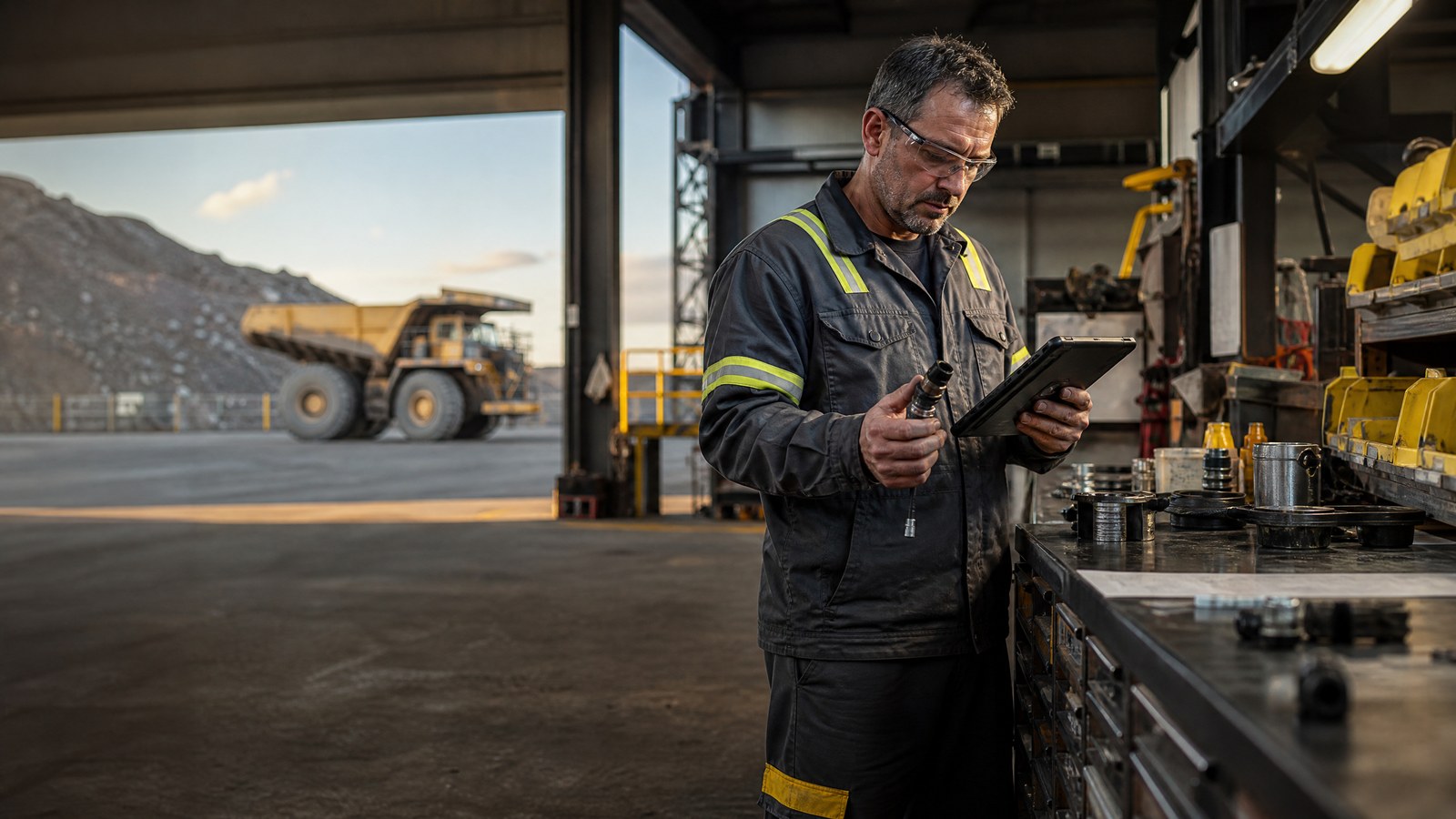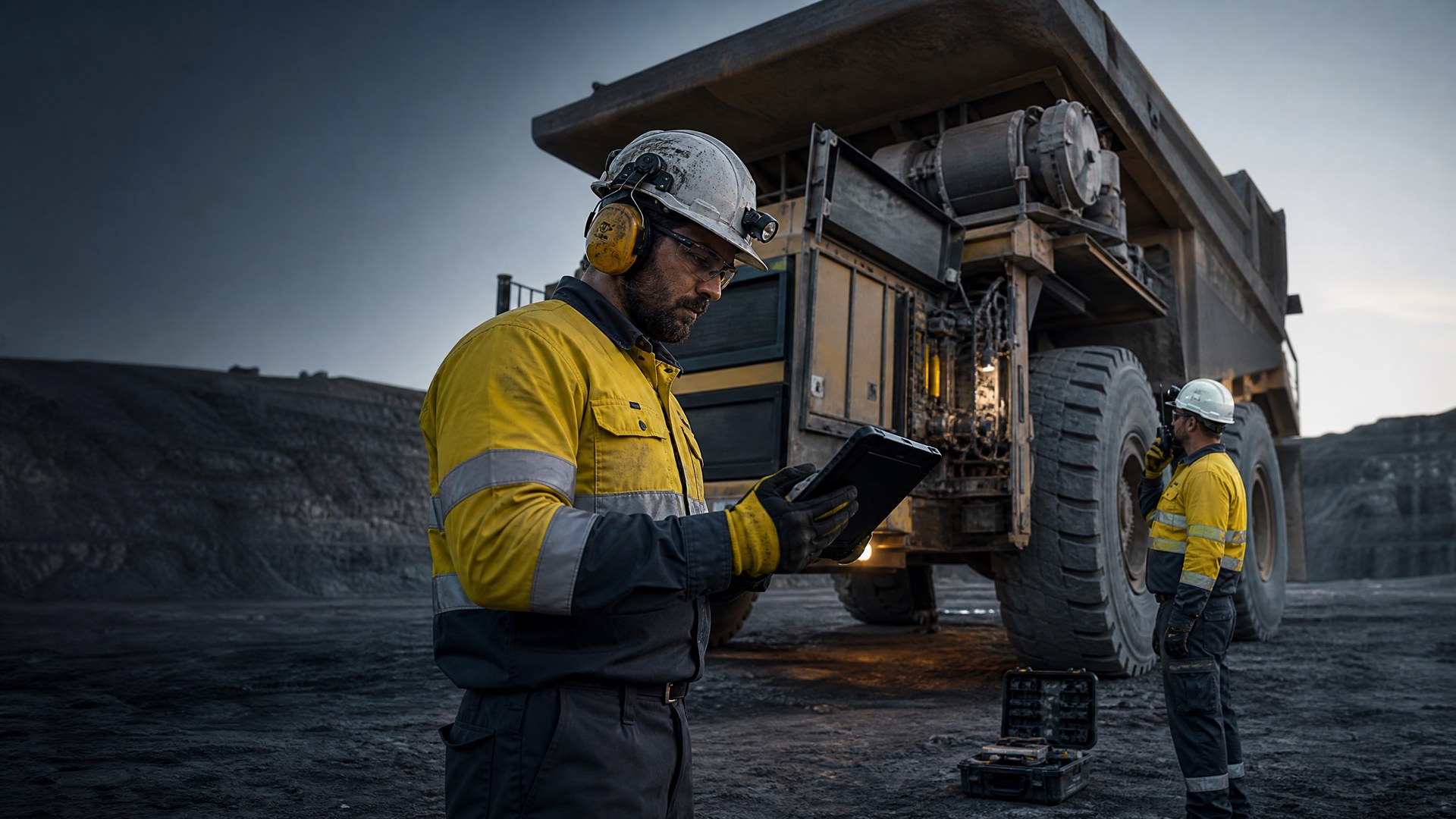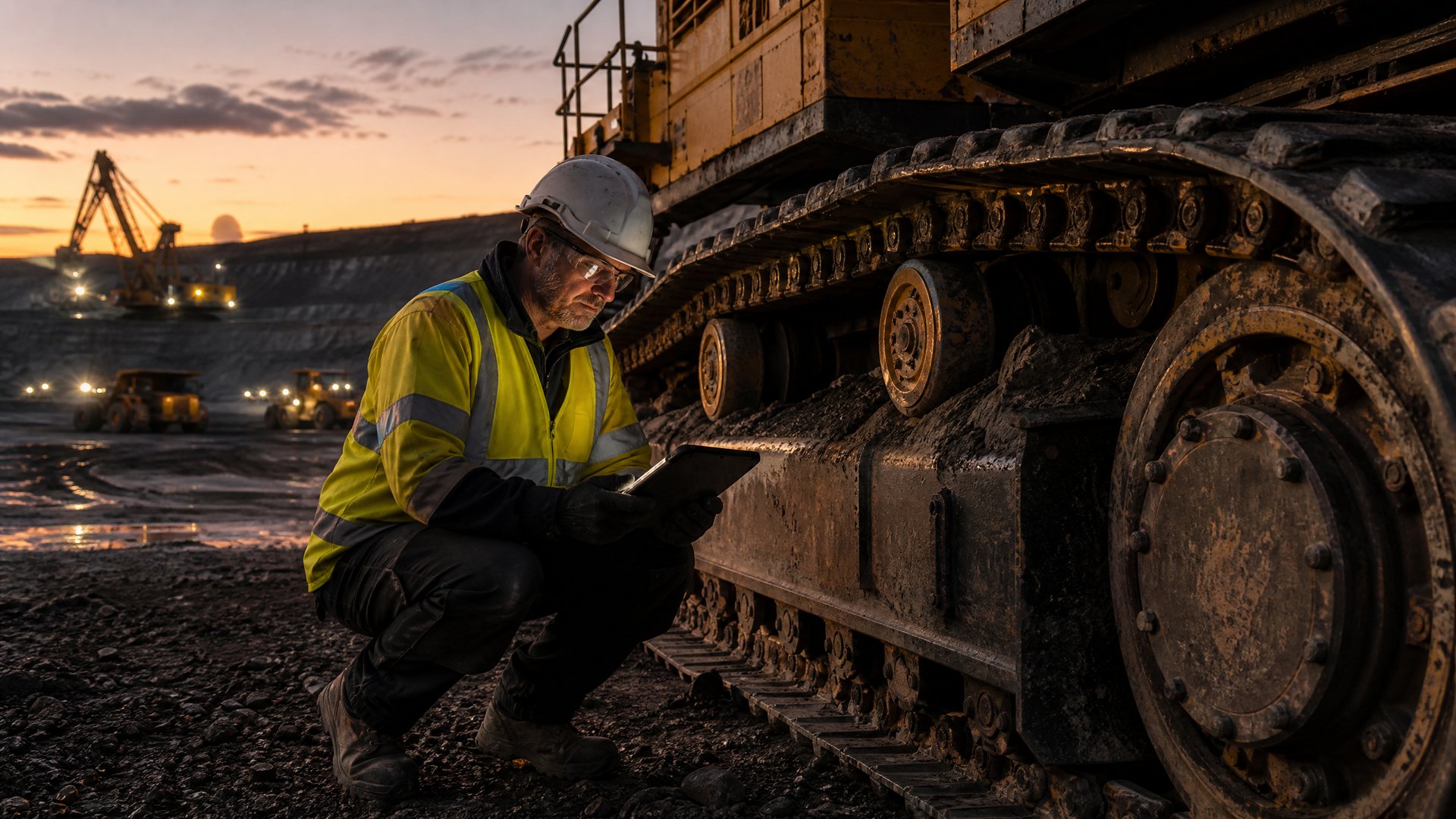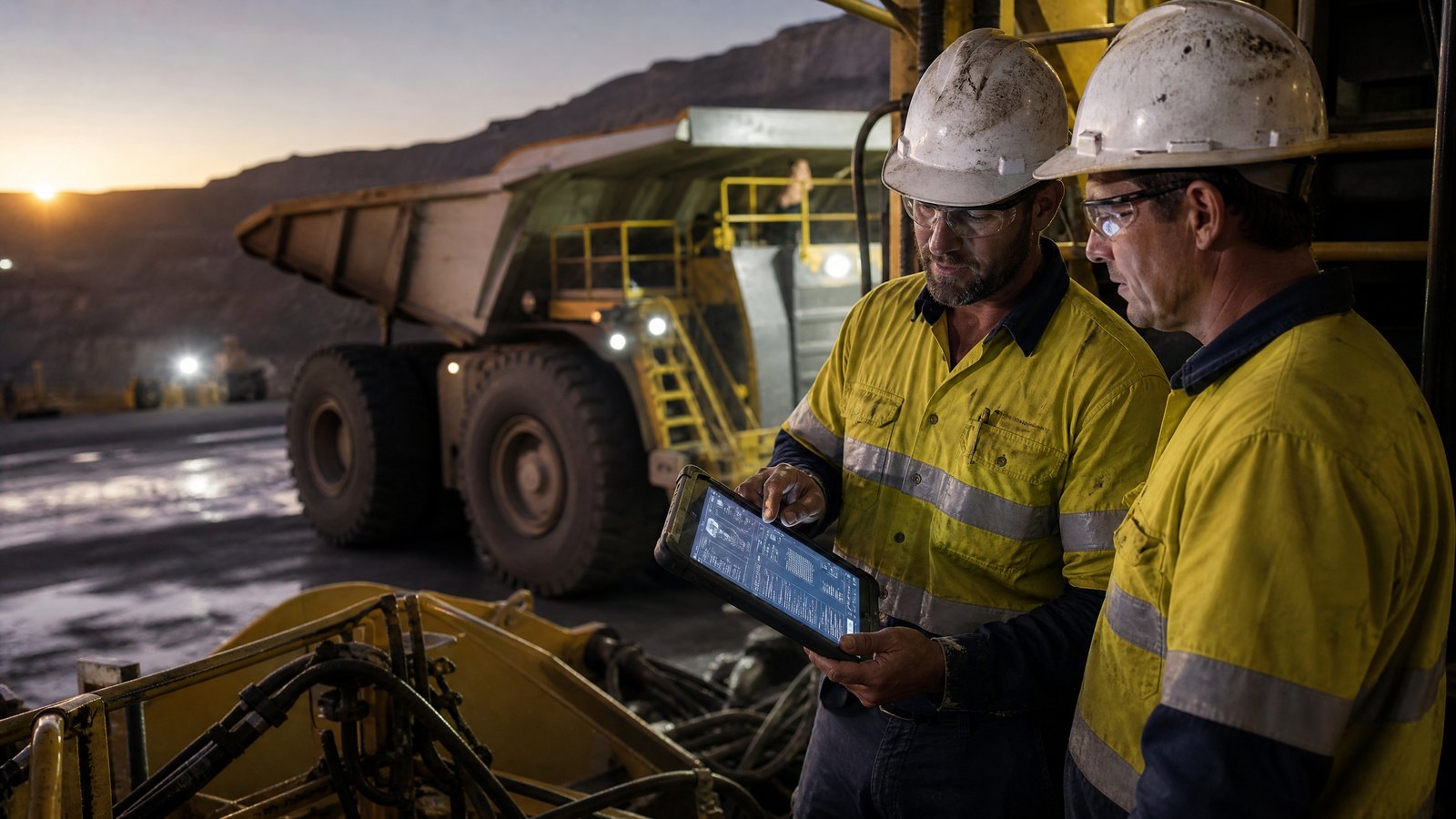

Frontline AI only earns trust when workers can see the source, revision, asset context, and confidence behind every technical answer.
Fast answers are not enough
Industrial AI is often sold on speed. Ask a question, get an answer, move faster. That promise is attractive, but it is incomplete. On a mine site, construction project, or heavy equipment workshop, the fastest answer is only useful if the crew can trust where it came from, whether it applies to the machine in front of them, and what level of uncertainty still remains.
Frontline workers do not operate in a clean office environment. They make decisions beside hot engines, suspended loads, live production pressure, changing ground conditions, and equipment that may have been modified across years of service. In that environment, an AI answer without source confidence is not a productivity tool. It is another assumption.
For frontline AI, the safety layer is not just the answer. It is the visible evidence behind the answer.
Trust depends on traceability
Most technical questions in heavy industry are not general knowledge questions. They depend on asset model, serial range, attachment, site procedure, maintenance history, operating condition, and the latest approved document revision. A response that sounds right can still be wrong if it is based on the wrong manual, an outdated instruction, or an informal note that was never verified.
That is why source confidence needs to be treated as a core feature, not a nice-to-have. The worker should be able to see the manual section, procedure reference, service bulletin, field note, or verified previous fix that shaped the response. They should also know whether the answer is based on a direct match, a partial match, or a weaker similarity.
| AI response element | What the worker needs to see | Why it matters |
|---|---|---|
| Source document | Manual, procedure, bulletin, or verified field record | Confirms the answer is grounded in trusted material |
| Revision context | Version, date, asset model, and applicability limits | Reduces the risk of using outdated or mismatched guidance |
| Confidence signal | Direct match, partial match, inferred link, or escalation required | Helps crews decide whether to act, check, or escalate |
| Operational evidence | Photos, prior work orders, symptoms, and outcomes where relevant | Connects documentation with what actually happened on site |
Frontline confidence is practical, not theoretical
Confidence does not need to be complicated for the user. The practical question is simple: what should a competent worker know before relying on this answer? If the answer comes from the current OEM manual and matches the exact model, say that clearly. If it comes from a similar asset or an earlier field event, show the limitation. If the system cannot find a strong source, it should say so and direct the worker to escalate rather than improvise.
This is especially important for isolation steps, lifting points, torque settings, fault codes, commissioning checks, hydraulic limits, electrical procedures, and any task where a poor assumption can create safety, downtime, warranty, or compliance risk. The point is not to slow people down. The point is to prevent false certainty from moving faster than the evidence.
The best AI answer may be a controlled non-answer
In heavy industry, there are moments when the most valuable AI response is not a confident instruction. It is a controlled non-answer: the system explains that it cannot verify the requested action from approved material, shows the closest relevant sources, and prompts the user to involve a supervisor, planner, engineer, or OEM contact.
That behaviour can feel conservative, but it is exactly what gives crews confidence in the system. Workers quickly learn the difference between a tool that will make something up and a tool that respects operational risk. Over time, that discipline creates a stronger knowledge loop. Each unresolved question becomes a signal that a manual is unclear, a procedure is missing, or a local workaround needs review.
Source confidence turns usage into intelligence
When source confidence is built into frontline AI, every question teaches the organisation something. Leaders can see which procedures are being checked most often, where answers have weak source coverage, which assets generate repeated uncertainty, and where frontline teams are relying on tribal knowledge because the approved documentation is not enough.
That is where DOCS AI becomes more than a document search tool. It becomes a practical operating layer that connects manuals, procedures, bulletins, field evidence, and frontline questions into usable intelligence. The business does not just answer questions faster. It improves the quality of the knowledge those answers depend on.
The standard should be evidence before confidence
Industrial AI will not win trust by sounding fluent. It will win trust by being useful, traceable, and honest about limits. Frontline teams need answers that are fast enough for the job, but grounded enough for the risk. That means every technical response should make the evidence visible before it asks the worker to rely on the conclusion.
The next stage of AI in mining, construction, and heavy equipment will not be defined by who can generate the most polished answer. It will be defined by who can connect the right answer to the right source, for the right asset, at the moment the crew needs it. Source confidence is the layer that makes that possible.