
Heavy industry collects more data than ever, and the people running the machines still can't get at it. Here's what that gap costs on the ground, and what actually closes it.
The High Cost of Information Silos: Why Your Best Data Never Reaches the Frontline
In heavy industry, the difference between a minor delay and a multi-million-dollar operational bottleneck often comes down to one factor: access to the right information at the right time. For decades, mining, construction, and heavy equipment sectors have invested heavily in data collection, yet the frontline workers—the operators and maintainers who actually turn the wrenches and run the machines—are consistently left in the dark. This is the reality of the information silo, a structural flaw that is quietly eroding profitability across the industry.
We are witnessing a critical disconnect. The enterprise collects vast amounts of telematics data, maintenance histories, and OEM specifications, but this intelligence is locked away in disconnected systems. When a machine goes down, the operator on the ground doesn't need a dashboard in head office; they need actionable, contextualised knowledge immediately. The failure to bridge this gap is what we call the "invisible tax" on heavy industry, and it is a problem that proceduralised knowledge alone cannot solve.
The Reality of Disconnected Systems
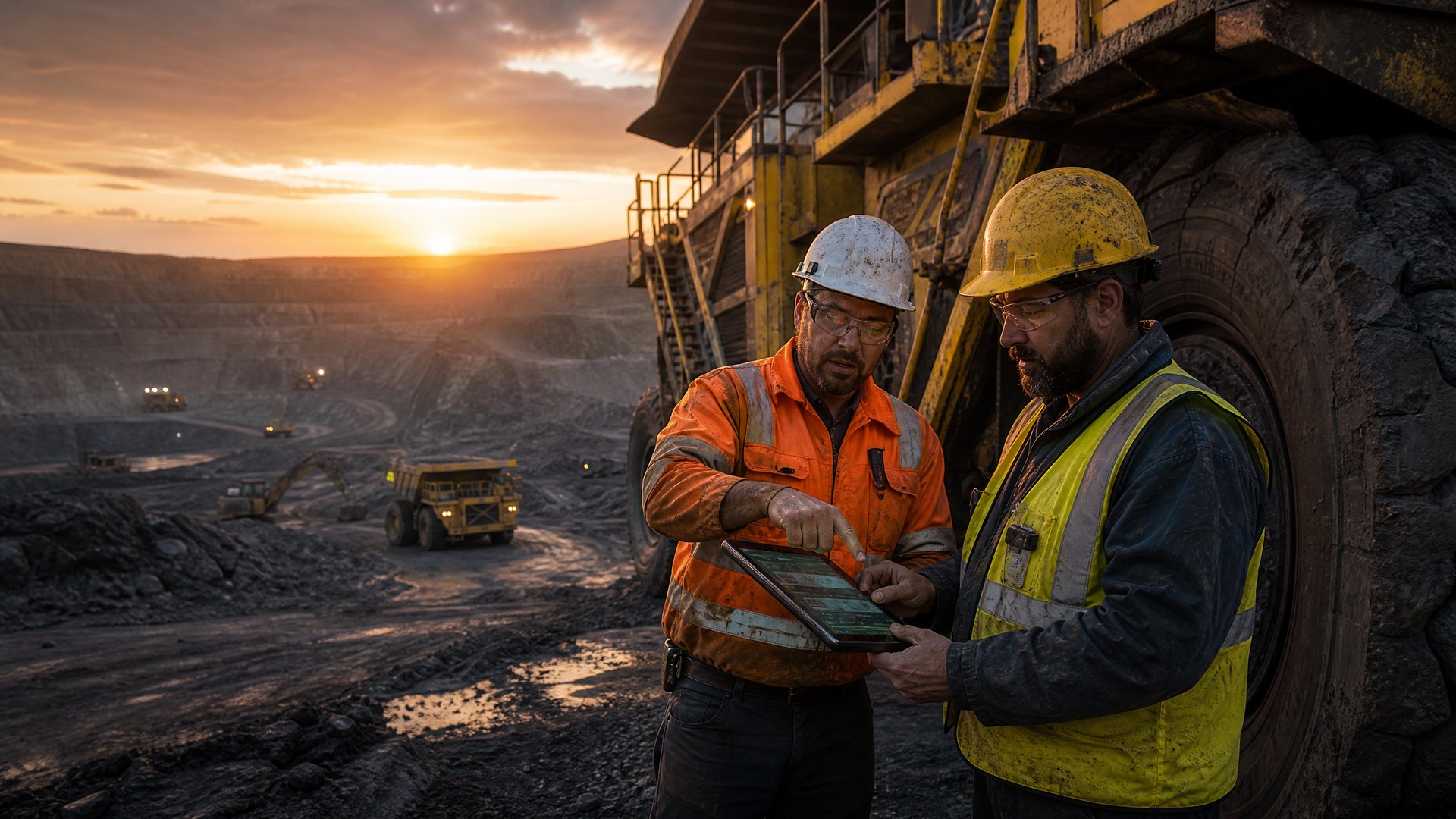
Consider a typical scenario on a remote mine site. A massive excavator throws an unexpected error code. The operator, miles away from a reliable network connection, pulls out a 500-page OEM manual—if they even have one in the cab. Meanwhile, the maintenance team back at base is looking at a different set of data, and the engineering team has access to historical failure modes that neither the operator nor the maintainer can see. This fragmented approach leads to prolonged downtime, repeated mistakes, and a fundamental breakdown in operational efficiency.
Information silos are not just a technology problem; they are a cultural and structural issue. When knowledge is hoarded in different departments or locked in proprietary software, it becomes a liability rather than an asset. The frontline worker is forced to rely on trial and error, or worse, unverified workarounds, because the official channels are too slow or too cumbersome to use in a high-stakes environment.
"The frontline worker is forced to rely on trial and error, or worse, unverified workarounds, because the official channels are too slow or too cumbersome to use in a high-stakes environment."
The Impact on Safety and Productivity
The consequences of information silos extend far beyond mere inconvenience. In high-stakes operations, a lack of access to critical knowledge can compromise safety. When an operator is unsure of a procedure and cannot access the necessary information, they may make a decision based on incomplete data, leading to accidents or equipment damage. Furthermore, the inability to share hard-won insights across shifts and sites means that the same mistakes are repeated, compounding the cost of downtime.
Information Silo ImpactFrontline ConsequenceBusiness CostInaccessible OEM ManualsProlonged troubleshooting, trial and errorIncreased machine downtime, reduced outputDisconnected Maintenance HistoryRepeating past mistakes, replacing wrong partsHigher parts spend, wasted labour hoursUndocumented WorkaroundsSafety risks, inconsistent operationsPotential accidents, compliance failures
Productivity is also severely impacted. Every minute an operator spends searching for information is a minute that a multi-million-dollar asset is sitting idle. The true cost of this downtime is staggering, yet it is often accepted as the "cost of doing business" in heavy industry. This acceptance is no longer viable in an era where margins are tight and operational excellence is the key to survival.
Breaking Down the Silos with the Enterprise Knowledge Graph
The solution lies in transforming how knowledge is captured, structured, and distributed. This is where the concept of the Enterprise Knowledge Graph becomes critical. By connecting disparate data sources—from OEM manuals to frontline observations—into a single, queryable intelligence layer, organisations can break down the silos and deliver contextualised information directly to the point of need.
A true knowledge network doesn't just digitise manuals; it institutionalises the hard-won frontline knowledge that is traditionally lost. When an operator discovers a fix for a recurring issue, that insight should be immediately available to every other operator facing the same problem, regardless of their location or shift. This real-time collaboration is what transforms raw data into an operational advantage.
The Role of AI in Frontline Empowerment
Artificial Intelligence plays a pivotal role in this transformation, but not in the way it is typically deployed in corporate environments. Frontline AI must be specific, fast, and, above all, trustworthy. It needs to cut through the noise and deliver the exact procedure or insight required to solve the problem at hand. This is the core value proposition of tools like Torqn Docs, which are designed specifically for high-speed technical documentation retrieval and knowledge synthesis in industrial settings.
By leveraging AI to parse complex manuals and connect them with real-world operational data, enterprises can finally provide their frontline workers with the intelligence they need to make safe, efficient decisions. The focus must shift from simply collecting data to actively deploying knowledge where it matters most.
Conclusion: The Imperative for Change
The era of the information silo must end. Heavy industry can no longer afford to leave its most valuable asset—frontline knowledge—disconnected and inaccessible. By embracing the Enterprise Knowledge Graph and deploying AI solutions designed specifically for the frontline, organisations can eliminate the invisible tax of disconnected systems, significantly enhancing both safety and operational productivity. The future of heavy industry belongs to those who can turn their data into actionable, frontline intelligence.