
Shift handover is where heavy industry either preserves operational memory or loses it
The Handover Is Not Admin. It Is Operational Control.
Every high-stakes site has a moment where the operation either keeps its memory or loses it. It is not the weekly planning meeting, the end-of-month report, or the executive dashboard. It is the shift handover.
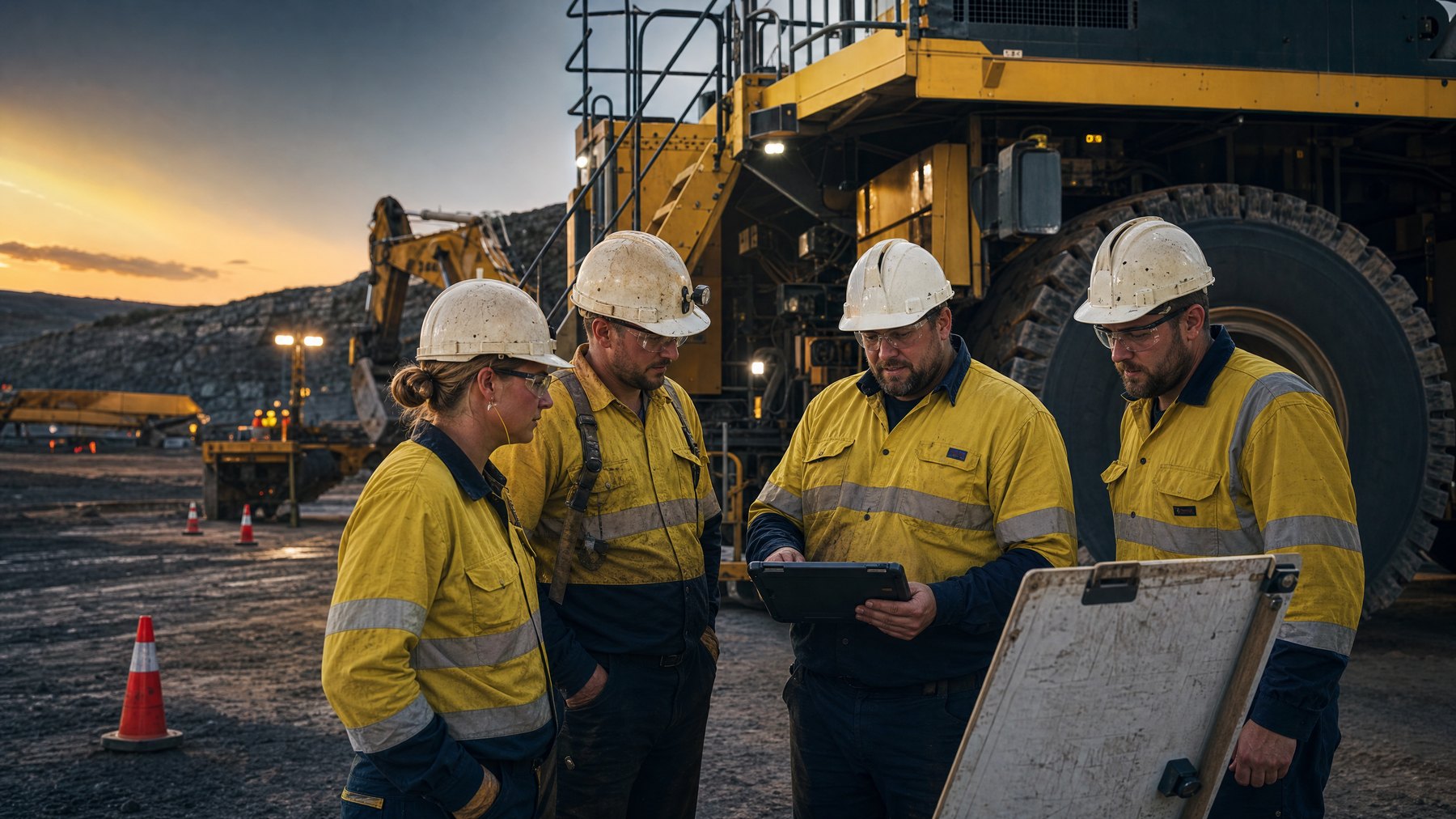
On a mine, construction project, or heavy equipment workshop, the handover is where live operating context moves from one crew to the next. A machine was running hot but stayed inside limits. A fitter found a workaround that got production moving but still needs a permanent fix. A new operator struggled with a procedure. A supervisor made a judgement call because the manual did not reflect the condition on the ground.
If that context is captured, the next crew starts with control. If it is lost, they start with assumptions.
Most Handover Systems Capture Events, Not Meaning
Most industrial teams already have some version of handover. There are pre-start meetings, whiteboards, logbooks, radio calls, spreadsheets, job packs, and notes buried in maintenance systems. The problem is not that people fail to communicate. The problem is that the communication is fragmented, inconsistent, and hard to reuse.
A handover note might say, “Unit 14 showing intermittent hydraulic warning.” That is useful, but incomplete. What matters is the operating context around it: when the warning appeared, what load the machine was under, which checks were completed, what was ruled out, who verified the temporary response, and what the next crew should watch first.
In heavy industry, the value of a handover is not the fact that something happened. It is the reasoning that explains what the next crew should do differently.
That reasoning is usually where the real frontline knowledge sits. It is also the first thing to disappear when handover depends on memory, hurried conversations, or disconnected systems.
Why This Matters More as Sites Become More Complex
Modern heavy equipment operations are more instrumented than ever, but they are not automatically more aligned. Telematics can show that an asset derated. A maintenance system can show that a work order was raised. A procedure library can show the approved method. None of those systems, by themselves, explains what the outgoing crew learned while dealing with the issue under pressure.
That gap matters because frontline demand for information is rarely abstract. Workers need direct answers about isolation, approved procedures, torque specifications, parts, troubleshooting steps, inspection requirements, and permit constraints. When those questions recur across shifts, they are not random queries. They are signals that the operation needs a better knowledge loop.
| Handover Input | What Often Gets Captured | What the Next Crew Actually Needs |
|---|---|---|
| Fault or warning | Code, asset number, time | Symptoms, conditions, checks completed, likely next action |
| Temporary workaround | Short note that production resumed | Risk controls, verification, expiry point, permanent fix owner |
| Procedure issue | Comment that the document was unclear | Exact step, field condition, approved clarification path |
| Operator learning | Informal coaching conversation | Reusable lesson linked to asset, task, and crew context |
From Shift Notes to a Reusable Knowledge Asset
The practical goal is not to create more paperwork. It is to make the best parts of handover searchable, structured, and reusable without slowing the crew down. A good knowledge network should let workers capture the field reality in the moment, attach it to the relevant machine or task, and make it available to the next person facing the same condition.
That changes the economics of frontline knowledge. A lesson captured once during night shift can help a day-shift operator avoid a repeat delay. A verified fix from one site can prevent another site from escalating the same fault. A recurring confusion point in a procedure can trigger a documentation update instead of becoming a permanent workaround.
This is where AI becomes useful, but only if it is grounded in the operation. AI should not replace the handover. It should help structure it, connect it to source documents, surface related lessons, and identify patterns that humans would otherwise miss. The output should be practical: faster troubleshooting, cleaner escalation, safer isolation, and fewer repeated mistakes.
What Leaders Should Measure
If handover is treated as a compliance ritual, leaders will measure whether the form was completed. If it is treated as an operational control point, they will measure whether the next crew made better decisions because of it.
| Old Measure | Better Measure |
|---|---|
| Handover form completion | Repeat issues reduced across shifts |
| Number of notes recorded | Verified fixes reused by other crews |
| Meeting attendance | Escalations resolved with existing knowledge |
| Documents referenced | Procedure gaps identified and corrected |
The purpose of handover is not documentation for its own sake. It is continuity of control.
The Competitive Advantage Is Memory
Heavy industry has spent years investing in systems that record activity. The next advantage will come from systems that preserve operational memory. That memory is built in small moments: the fault explained clearly, the workaround verified properly, the lesson attached to the asset, and the next crew starting with what the last crew already learned.
For frontline teams, that means fewer blind starts. For supervisors, it means cleaner accountability. For enterprises, it means knowledge that compounds instead of resetting every shift.
The handover is not admin. It is one of the highest-leverage knowledge moments on site. Treat it that way, and every shift makes the next one smarter.