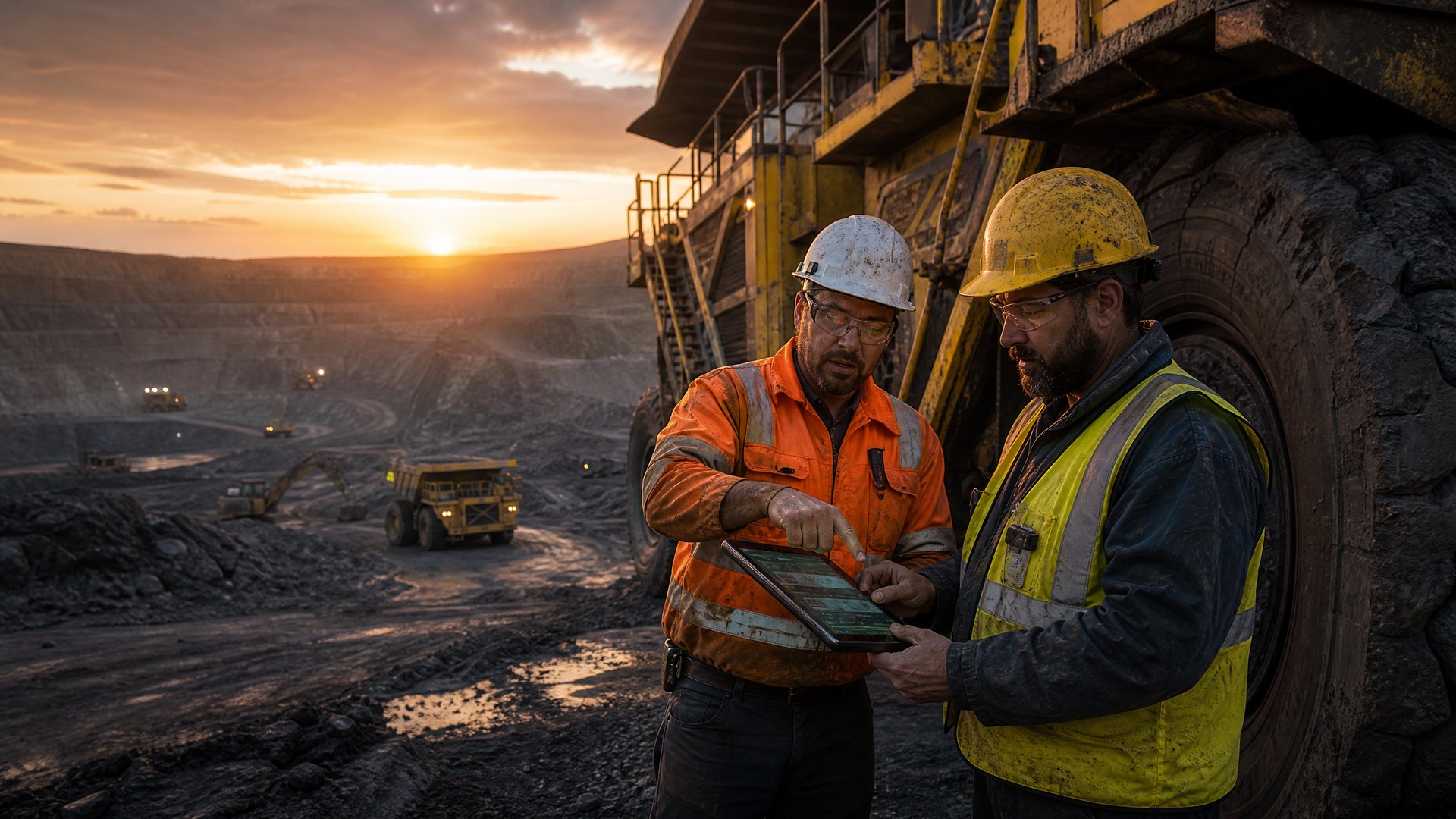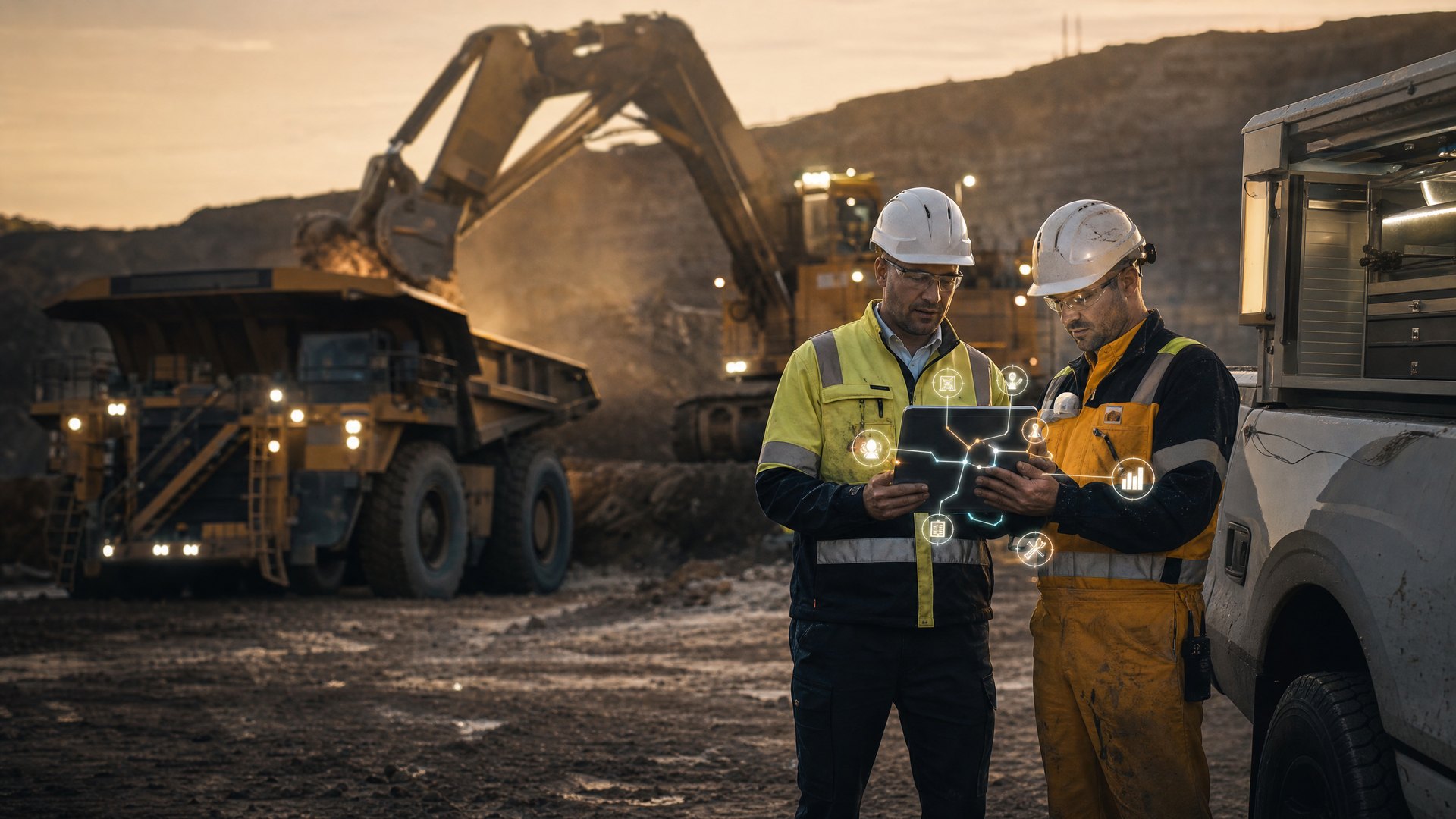

Heavy industry does not need another dashboard. It needs a context layer that connects assets, people, procedures, and frontline lessons into usable operational intelligence.
The Dashboard Problem Nobody Wants to Admit
Heavy industry does not have a visibility problem. Most mining, construction, and energy teams already have dashboards for production, maintenance, safety, fleet performance, inspections, and workforce activity. The problem is that these dashboards rarely agree on the same operational reality. A supervisor can see that a machine is down, a planner can see an open work order, and an operator can describe what happened before the fault. But the business still struggles to connect those facts fast enough to make better decisions.
That is why the next step is not another screen. It is a context layer: a connected operational knowledge graph that links assets, people, locations, tasks, incidents, documents, photos, fault codes, and prior fixes into one usable map of work. In high-stakes environments, context is not a nice-to-have. It is the difference between reacting to symptoms and solving the real problem.
"Dashboards tell leaders what changed. A context layer helps frontline teams understand why it changed, who has seen it before, and what to do next."
Why Disconnected Data Slows the Frontline
Most operational systems were bought to solve a specific function. The maintenance platform tracks work orders. The telematics system tracks equipment signals. The document library stores manuals. Messaging apps capture urgent conversations. Training systems record certifications. Each system is useful, but each one describes only part of the job.
When a dozer throws a recurring fault, the answer may sit across five places: a past mechanic note, a photo from a previous shift, an OEM procedure, a parts availability record, and an operator comment about operating conditions. If those signals remain disconnected, teams waste time rediscovering what the organization already knows. Worse, the next shift may repeat the same troubleshooting path because the lesson was never attached to the asset, condition, and fix that made it relevant.
What a Context Layer Actually Connects
A context layer does not replace existing systems. It makes them more useful by connecting operational relationships that traditional databases often miss. The goal is to answer practical questions in the flow of work: Has this happened before? Which asset was involved? Who solved it? What procedure applied? What part was required? What risk controls mattered?
| Operational Signal | Why It Matters | How the Context Layer Uses It |
|---|---|---|
| Asset history | Shows repeat failures, conditions, and maintenance patterns. | Links faults to prior fixes, parts, and technician notes. |
| Frontline observations | Captures the detail that never appears in formal systems. | Attaches photos, comments, and shift context to the asset and task. |
| Procedures and manuals | Provides approved guidance for safe execution. | Surfaces the right guidance based on machine, symptom, and role. |
| Expertise signals | Identifies who has solved similar problems before. | Routes questions to the right mechanic, operator, engineer, or supervisor. |
AI Needs Context Before It Can Be Trusted
Many organizations are trying to bring AI into frontline operations, but AI is only as useful as the operational context it can access. A generic assistant can summarize a manual. A context-aware assistant can compare the current symptom with past events on the same asset class, retrieve the relevant procedure, highlight a known workaround, and identify the person who last resolved the issue.
This is where the enterprise knowledge graph becomes practical. It gives AI structured relationships instead of isolated documents. The system can understand that a fault code belongs to a specific machine, occurred during a specific shift, was discussed by a specific crew, and was resolved using a specific part and method. That does not remove human judgment. It gives experienced workers better evidence and gives newer workers a safer path to competence.
The Metrics That Prove the Value
A context layer should be measured by operational outcomes, not software adoption alone. Leaders should track whether teams are finding the right answer faster, repeating fewer preventable mistakes, and turning frontline problem-solving into reusable knowledge. The strongest metrics are practical: mean time to diagnose, repeat fault frequency, first-time fix rate, time to onboard new operators, and the percentage of resolved issues that create reusable knowledge records.
The larger shift is cultural. When teams can see the relationship between assets, people, and decisions, knowledge stops being trapped in individual memory or buried in disconnected tools. It becomes a business asset that compounds every time a frontline worker solves a problem and leaves the organization smarter than before.
Build the Map Before Adding More Screens
Heavy industry does not need more dashboards that describe yesterday's problem in slightly different colors. It needs a connected map of operational knowledge that helps people act today. The organizations that win will be the ones that connect their frontline expertise, equipment history, and approved procedures into a living context layer.
That is the foundation for safer decisions, faster troubleshooting, better onboarding, and AI that earns trust on the ground. Before buying another dashboard, ask a harder question: can your teams see how the work, the asset, the risk, and the expert knowledge actually connect?