Most companies treat institutional knowledge like a filing cabinet. An Enterprise Knowledge Graph puts that intelligence to work on the front line.
The Enterprise Knowledge Graph: Your Company's Second Brain
In high-stakes industries like mining and construction, knowledge isn't just power—it's safety, efficiency, and profit. Yet, most companies treat their most valuable asset, institutional knowledge, like a forgotten archive. It's scattered across disconnected systems, locked in the minds of veteran operators, and buried in thousands of pages of static documents. What if you could connect it all? What if you could build a second brain for your entire operation?
This isn't a futuristic concept; it's the reality of an Enterprise Knowledge Graph. It's a dynamic network that maps the relationships between your people, equipment, processes, and historical data, turning siloed information into a powerful, queryable intelligence layer that drives your business forward.
The High Cost of a Disconnected Front Line
On any given day, a construction site or mine is a chaotic environment of interdependent decisions. When knowledge is disconnected, the consequences are immediate and expensive. A junior mechanic spends hours trying to diagnose a fault that a senior technician has fixed a dozen times. A project manager makes a critical planning error because they couldn't access the lessons from a similar job two years ago. An operator uses the wrong equipment configuration because the correct load chart was buried in a 500-page PDF.
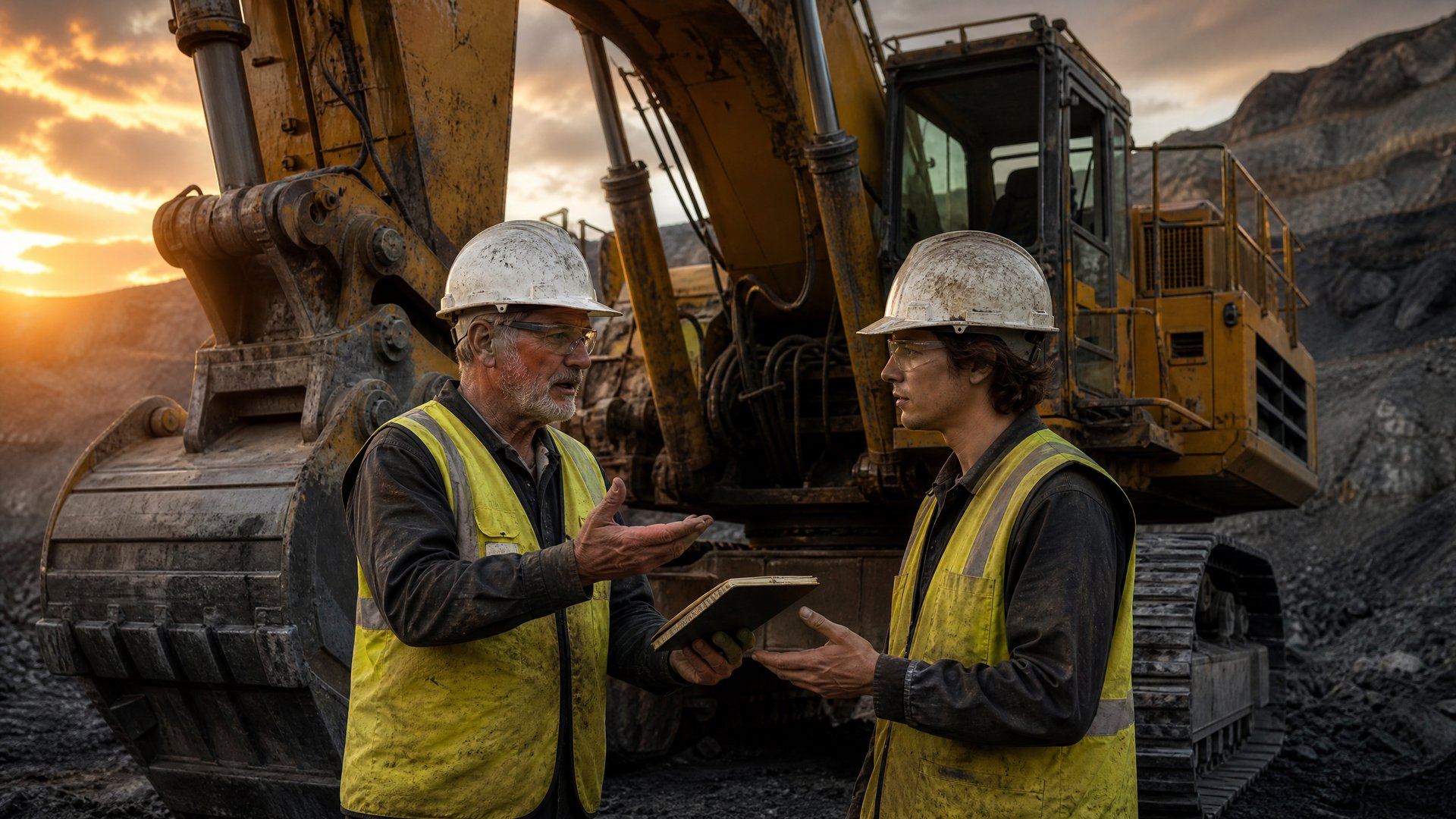
When your team can't find the right information at the right time, they're not just wasting time; they're operating with one hand tied behind their backs. The result is slower onboarding, repeated mistakes, and a constant, draining loss of expertise every time a veteran walks out the door.
How a Knowledge Graph Changes the Game
An Enterprise Knowledge Graph isn't just another database or a better search engine. It's a fundamental shift in how information is structured and accessed. Instead of searching for keywords and hoping for the best, your team can ask real-world questions and get contextual answers. The graph understands the relationships between things.
| Capability | Traditional Silos | Enterprise Knowledge Graph |
|---|---|---|
| Data Structure | Isolated files and folders | Connected, networked entities |
| Search | Keyword-based, often misses context | Relational, context-aware queries |
| Expertise | Hoarded in individuals, lost on exit | Captured, democratized, and retained |
| Decision Speed | Slow, reactive, based on memory | Fast, predictive, based on data |
From Theory to the Front Line: Real-World Scenarios
Let's move from the abstract to the practical. How does this work on a Tuesday morning when a haul truck is down or a critical lift is being planned?
Mining Scenario: The Predictive Repair
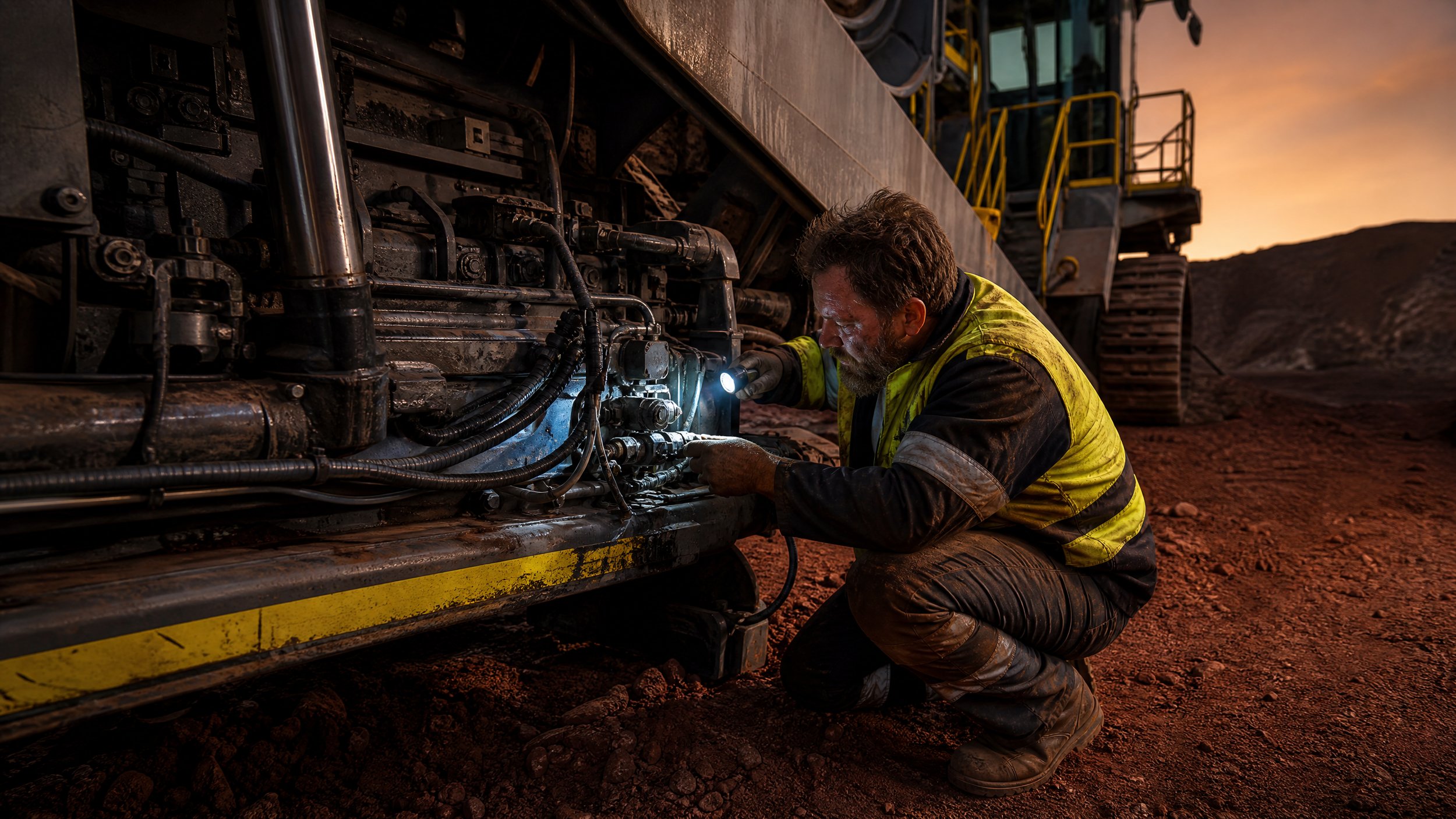
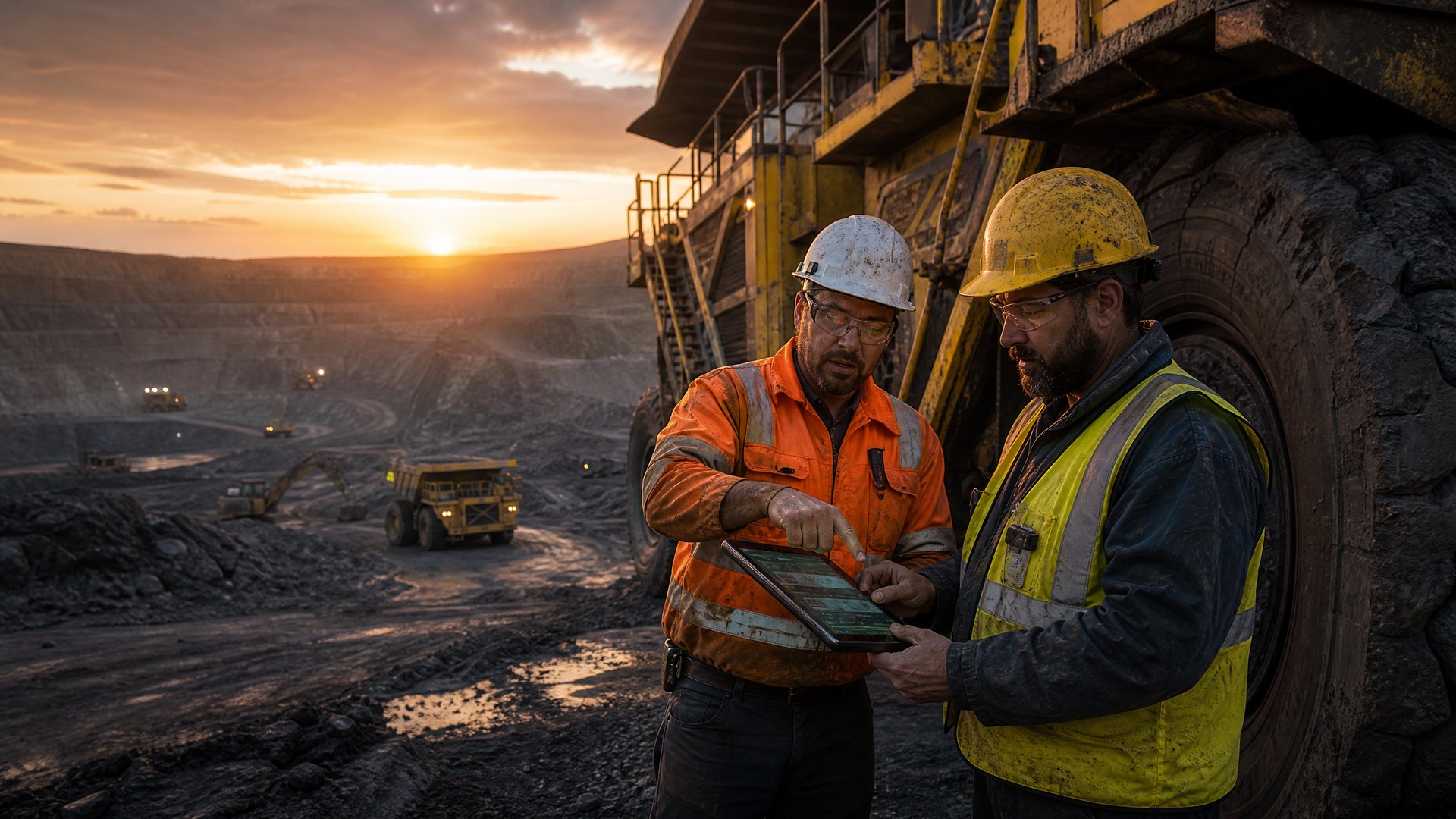
A haul truck throws a complex hydraulic error code. The mechanic on shift has never seen it before. Instead of guessing, she queries the knowledge graph from her tablet: "Hydraulic fault 3B on CAT 797F." The graph doesn't just return the OEM manual. It instantly links her to:
- The exact three pages in the manual for that fault.
- A video tutorial uploaded by a senior mechanic showing the exact repair.
- The full maintenance history for that specific truck, revealing a similar issue occurred six months prior on a sister machine.
- The name of the technician who fixed it, who she can call for advice.
Construction Scenario: The De-Risked Project
A project manager is planning a complex crane lift for a pre-fabricated module on a congested inner-city site. The margin for error is zero. He queries the knowledge graph: "Complex lifts, 50-ton module, urban environment." The system connects him to data from five similar projects across the company, showing:
- The crane configurations and ground-bearing pressures used.
- Safety reports and near-misses from those lifts.
- Environmental factors, like wind-tunnel effects caused by nearby buildings.
- Feedback from the operators and riggers involved.
Your Company's Second Brain is Within Reach
Building an Enterprise Knowledge Graph is no longer a decade-long IT project. Platforms like TORQN are designed to ingest your existing documentation, connect it to your operational data, and put it to work on the front line, fast. It's about transforming your greatest untapped asset—your hard-won knowledge—into your biggest competitive advantage.