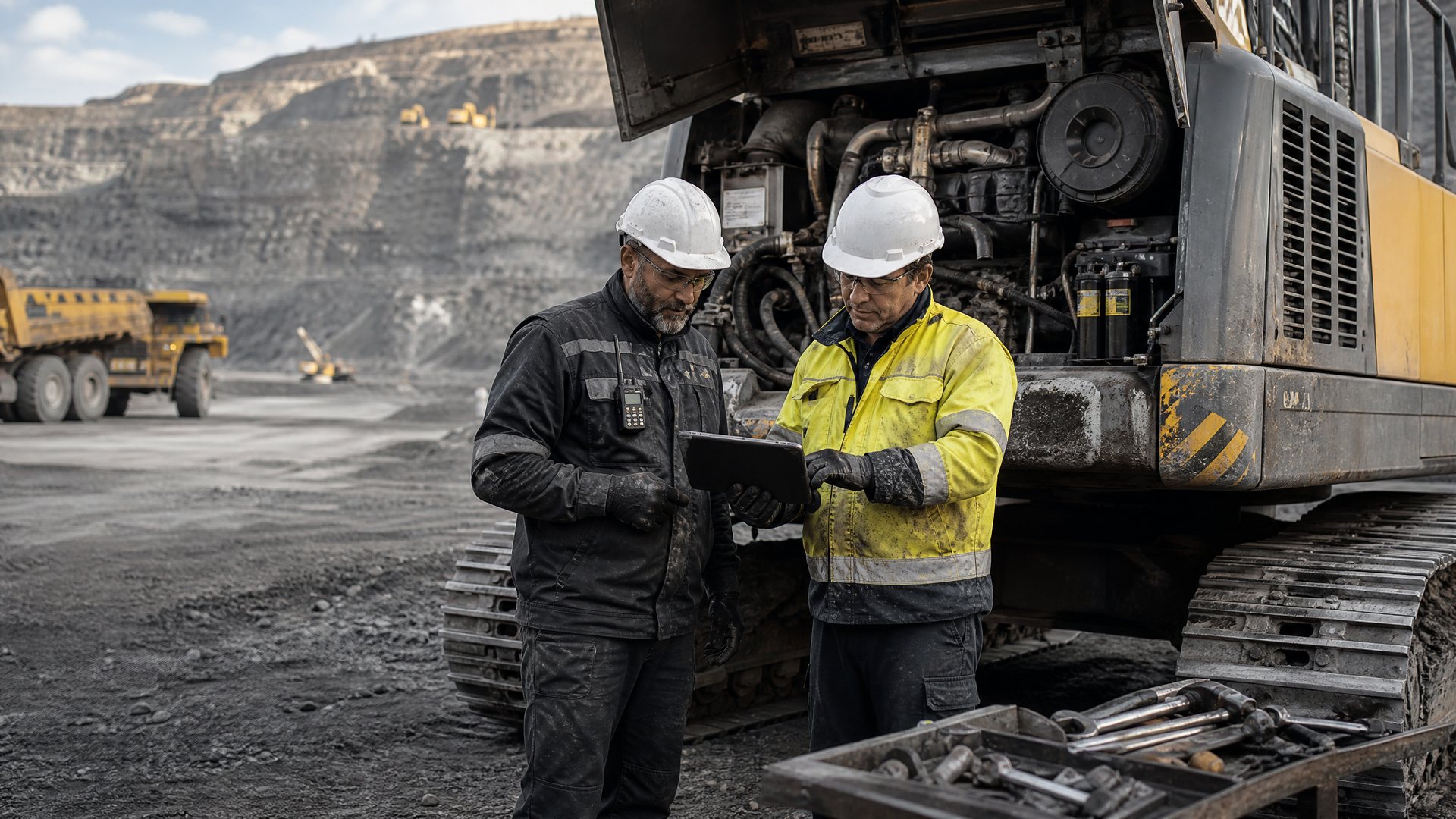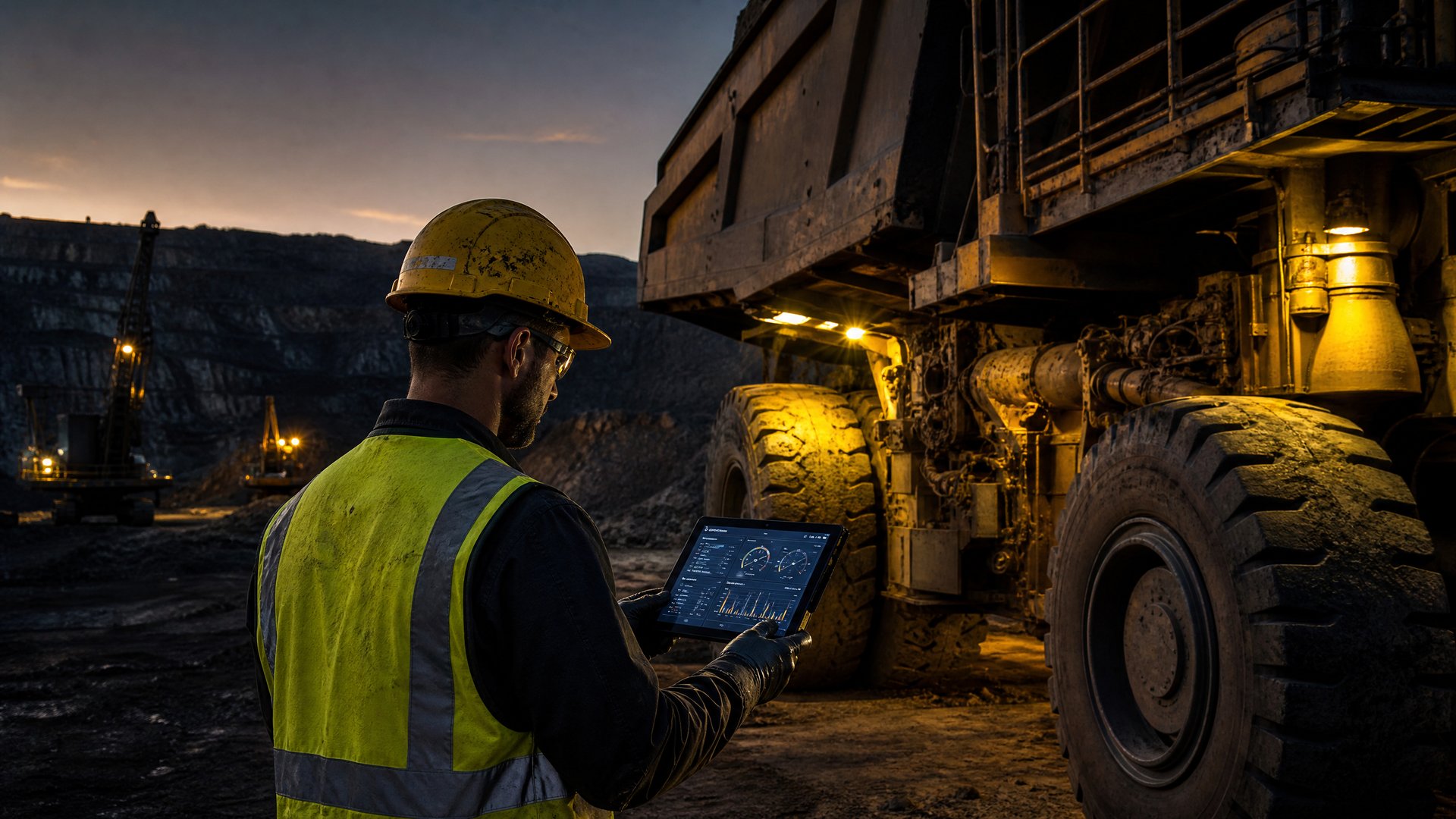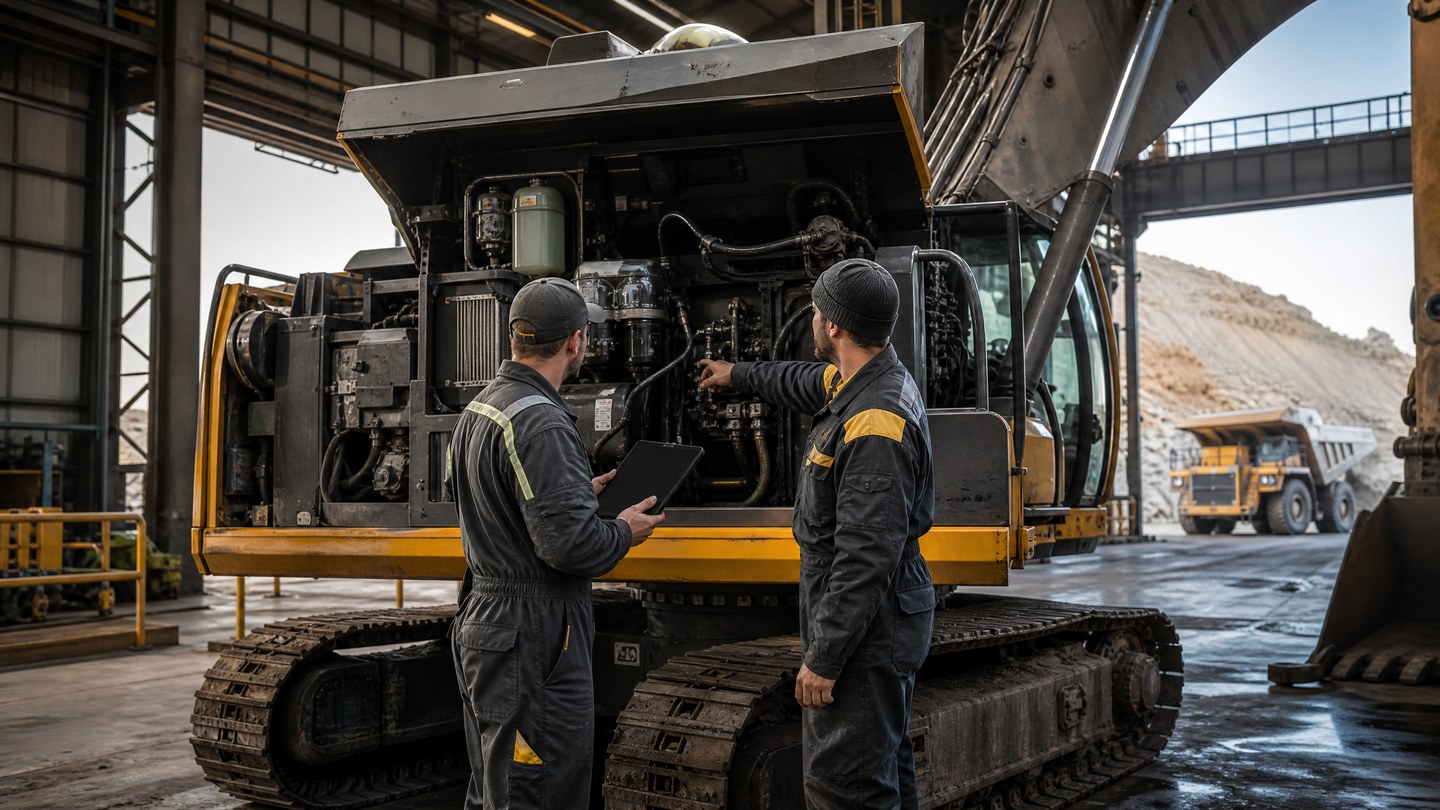

The most useful frontline AI does not rush to an answer. It asks the few clarifying questions that make technical guidance safe and actionable.
When a haul truck loses power on a ramp or an excavator throws a recurring hydraulic fault, the frontline does not need a generic answer. It needs the next right question. What changed? Which asset variant is involved? Is the alarm active now, intermittent, or historical? What work was completed before the issue appeared?
That is where frontline AI either earns trust or becomes another screen to ignore. A system that jumps straight to an answer can sound useful while quietly removing the context that makes a technical decision safe, relevant and repeatable. In heavy equipment operations, the cost of that shortcut is not just a poor search result. It is time lost, a weak handover, unnecessary escalation, or a repair carried out against the wrong condition.
An answer without context can be a wrong answer
Technical documents are written around standard conditions. Field problems rarely arrive that way. The same symptom can point to a different cause depending on machine configuration, operating environment, recent maintenance, duty cycle and the observations of the person at the controls. A diagnostic assistant that treats every question as complete will return broad guidance. A useful frontline assistant recognises what is missing and asks for it.
A good industrial AI interaction does not begin by pretending certainty. It begins by reducing uncertainty with the person closest to the machine.
This is not a case for making workers fill in another form. It is a case for keeping the interaction practical. The AI should request only the detail that materially changes the answer, then bring the relevant procedure, previous field evidence and escalation path into view. The worker remains the operator of the decision; the system makes the context easier to assemble.
The machine needs more than a fault code
Consider a question such as, “Why is this excavator overheating?” The prompt is real, but it is incomplete. The most valuable response is not a long list of possible causes. It is a short, asset-aware conversation that turns a vague issue into an actionable case.
What the AI needs to clarifyWhy it changes the next stepExact asset, model and configurationIt selects the correct procedure, limits and known service history.When the symptom occursLoad, ambient conditions and operating sequence help separate persistent faults from situational behaviour.Recent work or changesMaintenance actions, part substitutions and field modifications create relevant starting points for investigation.Available evidencePhotos, alarms and operator observations let the next worker validate the diagnosis rather than start again.
The point is not to automate judgement away. It is to prevent the all-too-common cycle in which a mechanic receives a generic answer, calls an expert, repeats the problem description, then discovers that the critical detail was never captured. Clarity should be created at the point of work, while the evidence is still available and the operating context is fresh.
Design the workflow around evidence, not chat
Conversation is only the entry point. The durable outcome is a structured record that connects the question to the asset, symptom, source documents, people involved, action taken and result. This turns an isolated interaction into operational memory.
DOCS AI can make technical documentation easier to query, but its real value increases when the answer is paired with frontline evidence. A technician should be able to see the relevant source, note the conditions under which a fix worked, and flag where the documentation did not reflect site reality. The next person should inherit that context without hunting through messages, spreadsheets or a colleague’s memory.
That workflow also improves escalation. When a question genuinely needs a specialist, the hand-off should include the machine identity, the observations already gathered, the sources checked and the decision that is now required. Specialists spend less time reconstructing the situation and more time resolving the exception. Frontline teams get a clear response instead of a request to “send more information.”
Measure whether better questions create better work
The test is operational, not conversational. Track how often an interaction captures asset context, links to a verified source, produces reusable field evidence and avoids repeat escalation. Review which clarifying questions consistently change the outcome. Those patterns show where procedures are thin, where training needs reinforcement and where equipment history is not reaching the people who need it.
Start small. Choose one recurring problem category, such as hydraulic faults, isolation questions or component identification. Define the few pieces of context that make an answer usable. Give workers a fast way to add an observation or photo. Then review the resulting cases with the team that owns the work. The objective is not a clever chatbot. It is a practical system that helps people make a safer, faster and more traceable decision.
In high-stakes operations, the best answer is often a better question asked at the right time. Build frontline AI to ask it, capture the response and leave the next crew better prepared than the last.