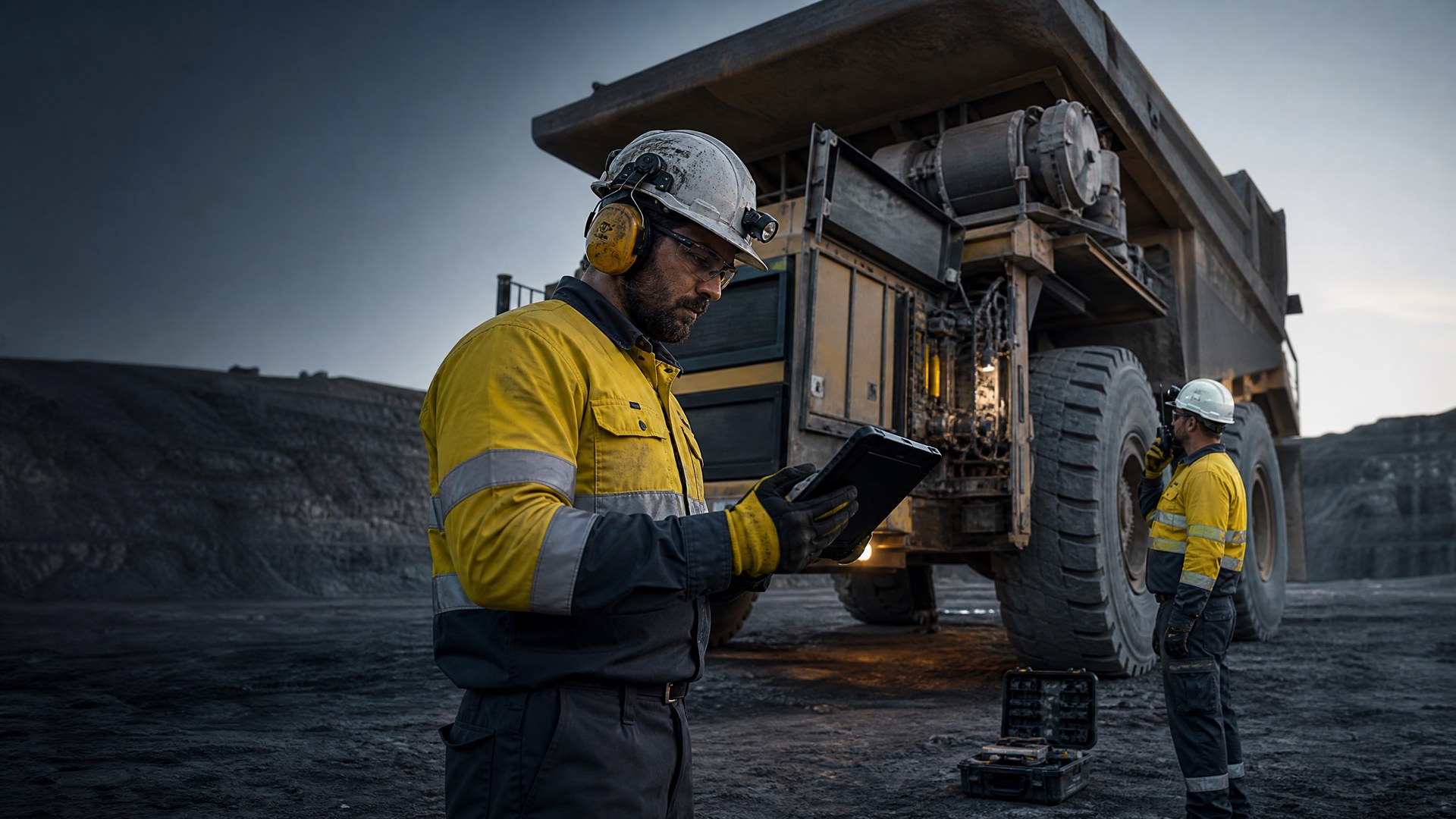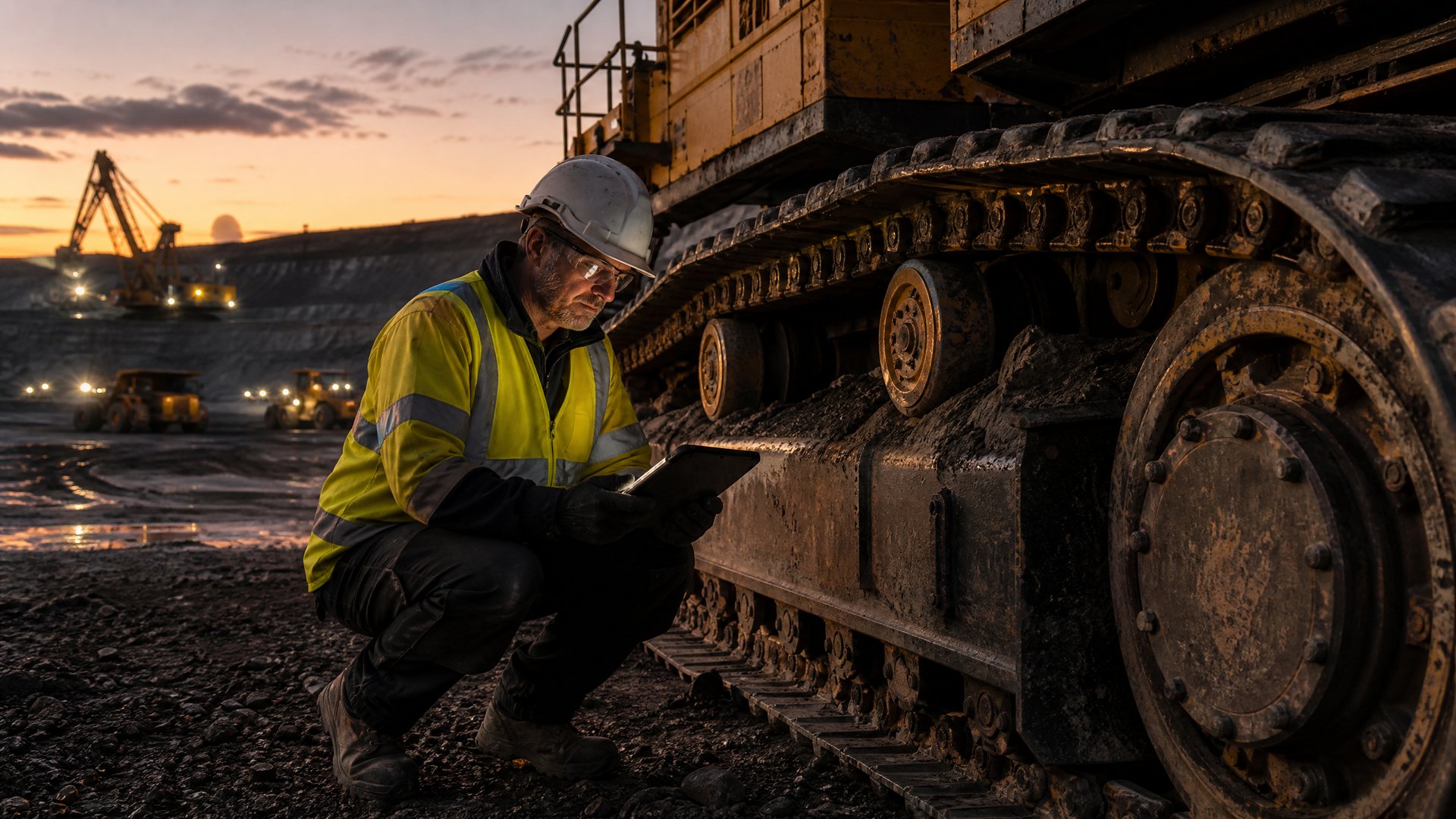

Heavy industry runs on two types of knowledge: manuals and worker experience. The latter is far more valuable, yet far more at risk of being lost.
Beyond the Manual: Capturing the "Dark Knowledge" of Heavy Industry
In the high-stakes environments of mining, construction, and heavy equipment operation, standard operating procedures and manufacturer manuals are essential. They provide the baseline for safety and operational efficiency. However, these documents only tell part of the story. The true lifeblood of any heavy industry operation is what can be termed "dark knowledge"—the undocumented, hard-won frontline insights that operators and maintainers accumulate over years of hands-on experience.
This knowledge encompasses the subtle nuances of machine behaviour, the creative but safe workarounds for persistent mechanical issues, and the intuitive understanding of how environmental factors like extreme cold or abrasive dust impact equipment performance. When this dark knowledge remains siloed in the minds of individual workers, organisations face a significant vulnerability. When an experienced operator retires or moves to a different site, their expertise leaves with them, leading to costly re-learning curves and potential safety risks.
The Cost of Lost Expertise
The financial impact of losing frontline knowledge is staggering, yet it rarely appears as a direct line item on a balance sheet. Instead, it manifests as increased downtime, longer diagnostic times for complex faults, and a higher frequency of avoidable errors. When a piece of heavy machinery goes down, the cost is measured not just in repair parts, but in thousands of dollars of lost productivity per hour.
Consider a scenario where a specific model of excavator consistently develops a hydraulic fault under certain load conditions. An experienced operator might know the precise operational adjustment required to prevent the fault, or a seasoned mechanic might know the quickest diagnostic path. If that knowledge is not institutionalised, a newer team member might spend hours troubleshooting or operating the machine inefficiently, leading to a breakdown that was entirely preventable.
Knowledge TypeSourceAccessibilityOperational ImpactProceduralised KnowledgeOEM Manuals, Standard Operating ProceduresHigh (Stored in digital or physical libraries)Provides baseline safety and standard operational guidelines.Frontline "Dark" KnowledgeYears of hands-on experience, trial and errorLow (Siloed in individual minds or informal networks)Drives peak efficiency, rapid troubleshooting, and nuanced problem-solving.
Transforming Knowledge into a Business Asset
To remain competitive, heavy industry enterprises must shift their perspective. Frontline knowledge must be treated not as an intangible byproduct of work, but as a critical, manageable business asset. This requires a deliberate strategy to capture, structure, and distribute insights across the organisation.
The traditional approach of asking workers to write down their tips in a logbook or a generic corporate wiki has consistently failed. These methods are disconnected from the actual workflow and demand time that frontline workers simply do not have. The solution lies in creating systems that integrate seamlessly into the daily operations of the workforce—platforms that make knowledge sharing the path of least resistance, not an additional administrative burden.
"The most valuable data in heavy industry isn't generated by sensors; it's generated by the people operating and maintaining the machines. Capturing that human intelligence is the next frontier of operational excellence."
The Role of Purpose-Built Networks
This is where purpose-built knowledge networks come into play. By providing a platform designed specifically for the realities of heavy industry, organisations can facilitate the natural exchange of information. When a mechanic successfully diagnoses a rare fault, they should be able to quickly document and share that fix in a format that is immediately accessible to their peers across different sites.
Furthermore, advanced AI technologies are revolutionising how this captured knowledge is utilised. Instead of searching through hundreds of pages of a manual or scrolling through endless forum threads, workers can ask natural language questions and receive precise, context-aware answers that combine official OEM data with validated frontline insights. The result is a dramatic reduction in time-to-resolution for complex technical problems.
Building the Enterprise Knowledge Graph
As this dark knowledge is captured and structured, it forms the foundation of an Enterprise Knowledge Graph. This interconnected web of data points—linking specific machine models, common faults, environmental conditions, and proven solutions—provides a level of operational intelligence that was previously unattainable.
This intelligence enables predictive maintenance strategies that are informed not just by sensor data, but by human experience. It allows for the rapid onboarding of new staff, who can immediately tap into the collective wisdom of the entire organisation. Ultimately, it transforms the hard-won lessons of the past into a proactive strategy for the future.
In an industry where margins are tight and safety is paramount, leaving frontline knowledge undocumented is a risk that enterprises can no longer afford. By investing in the tools and culture necessary to capture and share this expertise, organisations can unlock significant improvements in productivity, safety, and overall operational resilience.